
Time
Make the most of it!

Happy Christmas, for it is still the season of Christmas, and Happy New Year!
This is a piece which I started writing early on a Sunday morning when the clocks went back and we ‘gained’ an extra hour. It felt like a little gift from heaven; an hour of peace and quiet as the sun rose and all was still. The irony is that I ran out of time, and seem to have been chasing time ever since! Life gets busy, unexpected things happen, plans have to change and time marches on.
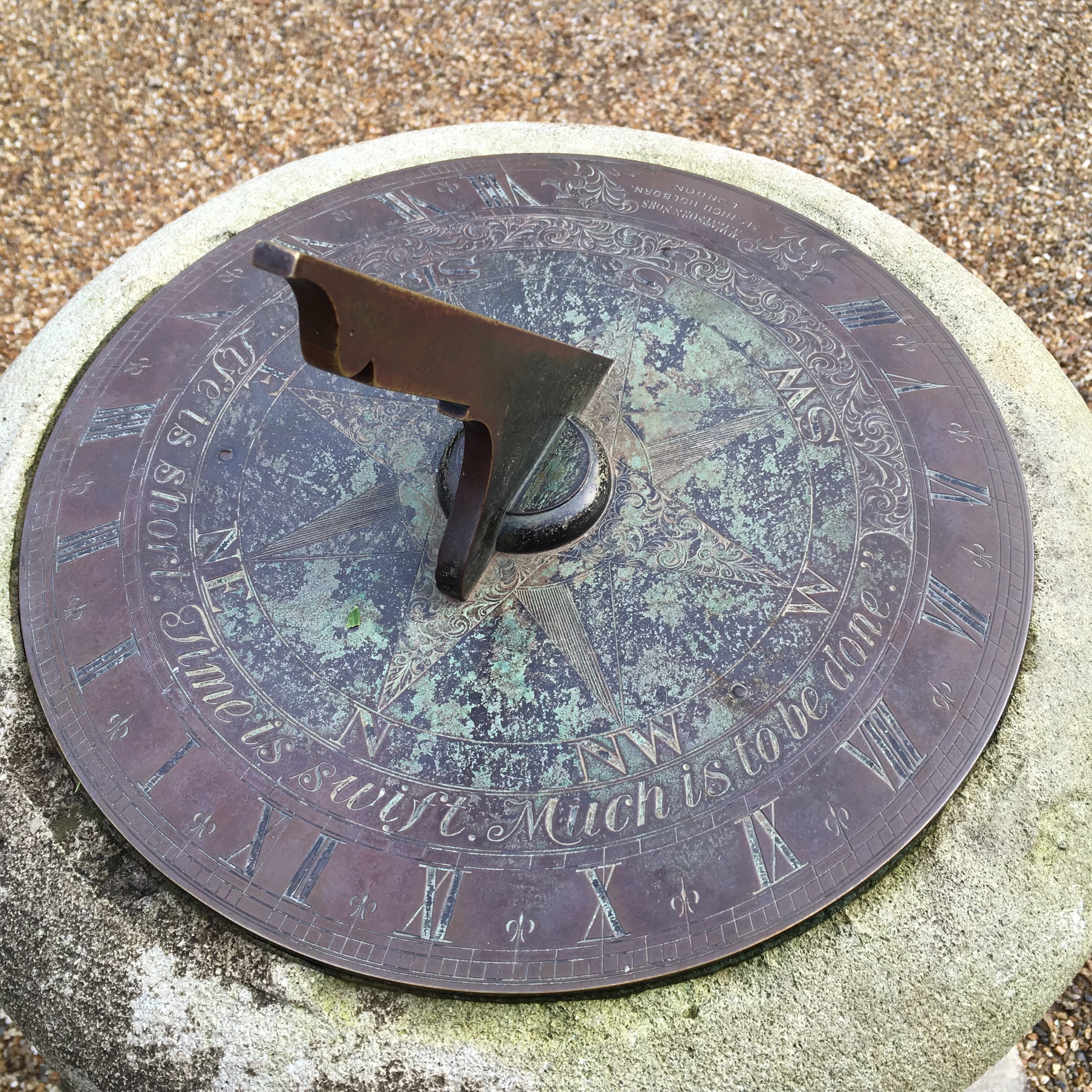
Increasingly I am drawn to the seasons in the church calendar, as well as the seasons we experience in God’s creation. Marking time with preparation, expectation, observance and particular focus. We have recently been through the season of Advent, we are now in the season of Christmas, and approaching Epiphany. With each come particular scriptures to read and ponder, theological truths to delve into, great works of music to listen to and hymns and carols to sing.
In Chris Tomlin’s song ‘How Great is our God’ he sings, “Age to age He stands, and time is in His hands, beginning and the end.” Time is indeed in God’s hands. He is the Lord of time. The seasons remind us that time progresses and God ushers in new seasons after old.
We can learn from time which has gone before, and we can look forward to the time to come, but we can only live now, in this moment.
Psalm 90:12 says, “Teach us to number our days aright, that we may gain a heart of wisdom.” Our time in this life is limited so we should use it wisely; seize the day; make the most of the time that we have for God’s purposes and glory. Every breath that we take has been ordained by God and every day we are alive means that God has purpose for us because he is the source of life.
In recent months I have been to too many funerals, and two of these dear ones were the same age as me. The heartache of deaths ‘before their time’ is particularly difficult to bear, and brings home the importance of making the most of each day. At one of the funerals these familiar verses from Ecclesiastes were read:
There is a time for everything, and a season for every activity under heaven:
a time to be born and a time to die,
a time to plant and a time to uproot,
a time to kill and a time to heal,
a time to tear down and a time to build,
a time to weep and a time to laugh,
a time to mourn and a time to dance,
a time to scatter stones and a time to gather them,
a time to embrace and a time to refrain,
a time to search and a time to give up,
a time to keep and a time to throw away,
a time to tear and a time to mend,
a time to be silent and a time to speak,
a time for war and a time for peace.
Ecclesiastes 3:1-8
We instinctively know these words to be true; they echo the reality we live. Change happens, seasons shift and we have to learn to adapt, rejoicing in the good times and bracing ourselves for the troubled times. Much as we may like to have ordered lives with predictable futures and smooth roads, real life is not like that and times can change abruptly and unpredictably.
Understanding and accepting that times change is not enough though. There is a deeper question to be answered and a yearning for something more. The vicar at the funeral did not seem to have an adequate explanation, so I looked for myself. A few verses later the writer says:
“He has made everything beautiful in its time. He has also set eternity in the hearts of men; yet they cannot fathom what God has done from beginning to end.” Ecclesiastes 3: 11
This is the reason for the yearning for something more that we experience: God has set eternity in our hearts. What does that mean? The best explanation I have read was written by the Scottish minister James Philip:
… there is a contrast and antithesis between ‘time’ and ‘eternity’ here, which adds to man’s perplexity, and for this reason: the ‘eternity’ in man’s heart leads him to long for permanence and the unchanging, whereas, in fact, he is confronted with the reality of the transient and the changing. Also, the paradox of his experience, namely that he is an immortal creature, with eternity set in his heart, and yet finite and mortal, a limited creature, means that he cannot see the end from the beginning, as God does, and is not able to see rhyme or reason in the ‘times’ that change. Man sees from ‘under the sun’, and it is the under side of the tapestry he sees, which is often incomprehensible. The tension between ‘today’ and ‘forever’ in the life of man cannot be fully resolved. Yet man can find ‘forever’ in ‘today’ by gratefully accepting the gifts of God, and doing His commandments. The lesson is therefore that of the acceptance of life as it is, be aware the danger of expecting too much from it and of trying to satisfy the longings for eternity with the things of time. There is such a thing as divine discontent, and we must learn to live with it.
Is that not true? Divine discontent. The paradox of our experience as mere mortals, yet with immortality set in our hearts. This is what it is to be made in the image of God; we are more than simply flesh and blood. When we recognise this, and when we acknowledge and submit to our Creator, then we are faced with an even greater paradox. James Philip continues:
…it is a very strange thing, and one of the paradoxes of the gospel, that when men with a hunger in their hearts are drawn thereby to Christ and are saved, they find another, and even more intense, hunger born within them. By saving us, God has, as it were, quickened the ‘infinite thing’ within us, and made it pulsate and vibrate with living energy, so that as Christians, we yearn and long and hunger after God. There are deeps in the Christian’s life that nothing but eternity will satisfy.
We must recognise this ‘infinite thing’ and live accordingly, determined to spend our time in this life wisely and obediently, to the glory of God, and understanding that our yearning will not be fully satisfied until Jesus returns or we meet him at the end of our life on earth. It is actually a glorious reality to comprehend. It is because eternity has been set in our hearts that we are able to have spiritual discernment, that we can experience the transcendence of exquisite art or wonderful music or spectacular architecture or the beauty of the natural world. It is because eternity has been set in our hearts that we can pray to and experience communion with the Creator of the universe, and that we can know the love of Christ which surpasses knowledge and we can be filled with all the fulness of God (Ephesians 3:19).
Time is a gift. Make the most of it!